Showing posts with label spinal. Show all posts

Wednesday, April 27, 2016

3 Medical Practices That Support Spinal Health

Spinal Health
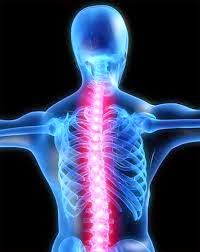
The spine is one of the most vital components of the human body and plays a key role in supporting the body weight and protecting the key components of the nervous system. Due to its key functionality, the spine also undergoes tremendous stress throughout the day, and over a period of years, this may lead to a number of spinal health conditions.

Various types of injuries or accidents are also one of the key reasons for spinal conditions. Spinal health disorders can have a debilitating effect on our well-being by drastically limiting our mobility and our ability to carry out various routine tasks. A number of medical practices specialize in the treatment of spinal health conditions with each having its own unique benefits and applications.

Chiropractic

ChiropracticChiropractic is a medical practice that is concerned with the diagnosis as well as treatment of various mechanical disorders of the human body's musculoskeletal system. Spinal adjustment or "spinal manipulation" is one of the key areas of focus of chiropractic medicine as the nervous system is considered a vital component in chiropractic medicine and the spine is one of the key components of the human nervous system.

Chiropractic spinal adjustment offers effective treatment for a wide range of spinal system disorders with the effects of such treatment ranging from temporary pain relief to long-term wellness benefits as well as preventive care.

Chiropractic treatment of spinal conditions involves spinal adjustment through the application of pressure by hand on the patient's back/spine by a trained chiropractor. This minimizes the risk of side-effects and complications usually associated with complex surgical procedures and makes chiropractic care a good choice for various types of mild spinal health conditions. Some of the spinal health conditions for which chiropractic care is uniquely suitable include mild scoliosis, lower back pain, neck pain etc.

Orthopedics & Spine Surgery 
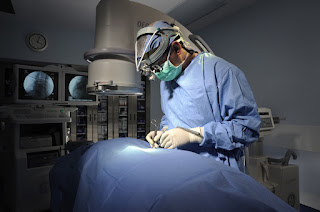
orthopedic spinal surgery

Orthopedic surgeons specialize in the diagnosis as well as treatment of health conditions involving the bones and joints. Treatment of a wide range of spinal conditions is also one of the key components of the training of orthopedic spine surgeons and many orthopedic surgeons also specifically specialize in the treatment of spinal disorders.

Though, many of the spinal conditions treated by orthopedic spinal surgery overlap with those treated by neurosurgery, orthopedic surgeons are uniquely suited for treatment of spinal health conditions that involve specialized knowledge of spinal bones and joints. Some of such conditions include the treatment of severe spinal deformities (such as kyphosis and scoliosis) and treatment of spinal bone tumors.

Neurosurgery 

Neurosurgery involves diagnosis and treatment of various disorders of the nervous system, which consists of the brain, the spinal cord and the peripheral nerves. When it comes to treatment of spinal health conditions, neurosurgeons generally specialize in the performing procedures inside the lining of the spinal canal or the dura (intradural procedures).

Many of the common spinal disorders such as disc herniations, spondylolisthesis, disc degeneration, spinal stenosis are nowadays being treated by both neurosurgeons and orthopedic surgeons. However, neurosurgeons are more uniquely suited for treatment of certain spinal conditions that involve the spinal cord (intradural conditions). Some of such conditions include spinal cord tumors, syringomyelia, Chiari malformation, spina bifida, tethered spinal cord etc.

Tuesday, February 16, 2016

An Inside Look at Spinal Discectomy vs. Spinal Fusion Surgery

Spinal Discectomy Spinal Fusion SurgeryBack pain is the second most popular reason why people go to their doctor (second to the common flu.) There are many different reasons why people develop back problems and different ways to treat the pain and physical issues that drives people to a doctor, physical therapist, or in extreme cases, a spine surgeon.


If you have been dealing with chronic back pain and mobility issues, and perhaps you've been seeing a physical therapist about it, it may be time to have a conversation about spine surgery to effectively treat your condition for the long-term. There are two common spine surgical procedures that are very effective and have helped many people get over their back pain: spinal fusion and spinal discectomy.

What is Spinal Fusion?

When one or more vertebrae are united or fused together the process is known spinal fusion. People often think of it as welding but it is less about welding but more about grafting one bone to another. The actual “welding” occurs as the body heals the graft over a period of several months.

Reasons for Spinal Fusion Surgery

Spinal fusion surgery is often recommended to treat broken vertebrae, to correct abnormalities like slippages or spinal curves and to eliminate pain from motion. It has also been used to treat some ceria disc hernias as well as certain spinal instability.

Instability refers to excessive motion between vertebrae. This is thought to be the main cause of most back and neck pain and since it can cause damage to nerves, it is a condition that needs to be dealt with sooner than later.
Spinal Fusion Surgery

How is Spinal Fusion Surgery Performed?

There are many approaches or methods that a surgeon can take to conduct a fusion surgery but they all have one thing in common, a bone graft. Whether for cervical or lumbar spinal fusion surgery, the bone graft is placed either on the front of the vertebrae or the back or by doing it both ways. The surgeon is the one who needs to determine the correct approach that will make the final outcome positive and speed up the actual fusion time.

Most board-certified spine specialists perform a frontal bone graft because it is easy but fusing the lumbar and thoracic segments of the spine is best approached from a posterior side. Sometimes the surgery requires the use of screws, cages or splints to hold the vertebrae together as the bones fuse. The desired outcome of a spinal fusion surgery is a solid union or vertebrae

Spinal Discectomy

Spinal discectomy is a common surgical procedure done to treat conditions like herniated or ruptured discs or lumbar spine. Disc herniation or disc prolapse occurs when the outer wall of a disc, the annulus fibrosus is weakened. The weakening may cause the inner soft part of the disc to tear causing the nucleus pulposus to push its way out.

When this material extends past the margin of the outer disc and can cause excruciating pain as it presses against sensitive nerve in the spine. The nerve tissue might get damage causing the patient to feel weak or feel tingling or a pricking sensation in the legs and arms.

Reasons for Spinal Discectomy

Spinal discectomy is a procedure that is meant to take the pressure off the sensitive nerve tissue by removing part of the damaged disc. Not everybody with a herniated disc needs to undergo surgery. Some people find relief from non-surgical treatment and anti-inflammatory medication.

How is Spinal Discectomy Surgery Performed?

Spinal discectomy is an open surgery that involves having a small incision over the spine. Some ligament and bone material might be removed to gain access to the damaged disc. Spinal surgery has been undergoing some exciting changes and there are now more novel and less invasive ways to perform spinal surgery.